Among the strongest social needs that an individual feels after their basics of roti, kapda and makaan is taken care of, is the need to belong. The need to be a part of something bigger than themselves, a sense of connectedness with a group of people, no matter how small or big, the need to be seen and heard by another person and also to be noticed in their absence.
Over the years, we have spent a lot of time simplifying how this need could be catered to through our work with our children. We have spent years trying to find out the right combination of things to do to help our children feel belonged in our space and the following is what we have learned –
- Know their names
One of the first and most significant mark of identity is one’s name. And therefore, the easiest way for someone to feel seen is to be acknowledged by their name. In our classrooms, it is so easy to become invisible and spend an entire lifetime unnoticed. The teachers know the names of the smartest or the naughtiest ones, but most children who lie somewhere in between both ends sometimes spend over 10 years in a school without being addressed by their names! Back at home, most of our children do not have endearing nicknames but are addressed based on their physical features — if they are dark-skinned, most often they will be called Kalwa or Kallu, if they are short, then Chhotu or Chhuttan and so on.
As a strict practice, we insist that our facilitators know everyone’s names and in the case, while talking to someone, they have forgotten their name then just ask the child and apologize for forgetting. Say if we want to appreciate Jatin, but do not remember his name, we ask him, then say ‘Sorry Jatin’ and then go on to say what Jatin did well.
We have seen the brightest of smiles when we’ve called a child by their name and almost always their response has been — “aapko humara naam yaad hai?” (You remember my name?!). In that moment of acknowledgment by their name, they have felt that they belong with us.
2. Notice their absence
Our children belong to our spaces because they have signed up for it and physically show up for our sessions. So, on the days that someone doesn’t show up, we ask their friends about it. Unless someone is out of town for a while, the absentee children always come back the next day, even if they are sick, to inform that they are sick and will not be able to join this time too, or sent a message through someone. This rubs off on the other children too, who inform us beforehand how they might be going to a relative’s place or for some work and will not be able to join the next session. They inform us because they feel they belong with us and if they don’t show up one day, they will be missed.
Every time we reach a session, we encourage our facilitators to engage in small talks with our children. Just a general chit-chat on what is happening in their school or community, how is everyone at home, or any other new or old update that they might want to share. Some of our strongest learnings about our children’s lives and our most trusted tool for trust-building have been these chit-chats. We learn about the food they eat, their families, their fights with friends, updates about other children in our center, and more. We encourage our team to come back and share most of these updates with the rest of us, so that whichever combination of facilitators visit the center the next day can ask a follow-up question or two, just to look out for our children and also to let them know that we carry them in our thoughts even when we aren’t physically at their center. Having these follow-up conversations bring out some of the best expressions of excitement, happiness, and also amazement that we are interested in them and their lives, even though it might be beyond the parameters of our work. They feel important to us, they feel they belong with us.
4. Mainstream normalcy
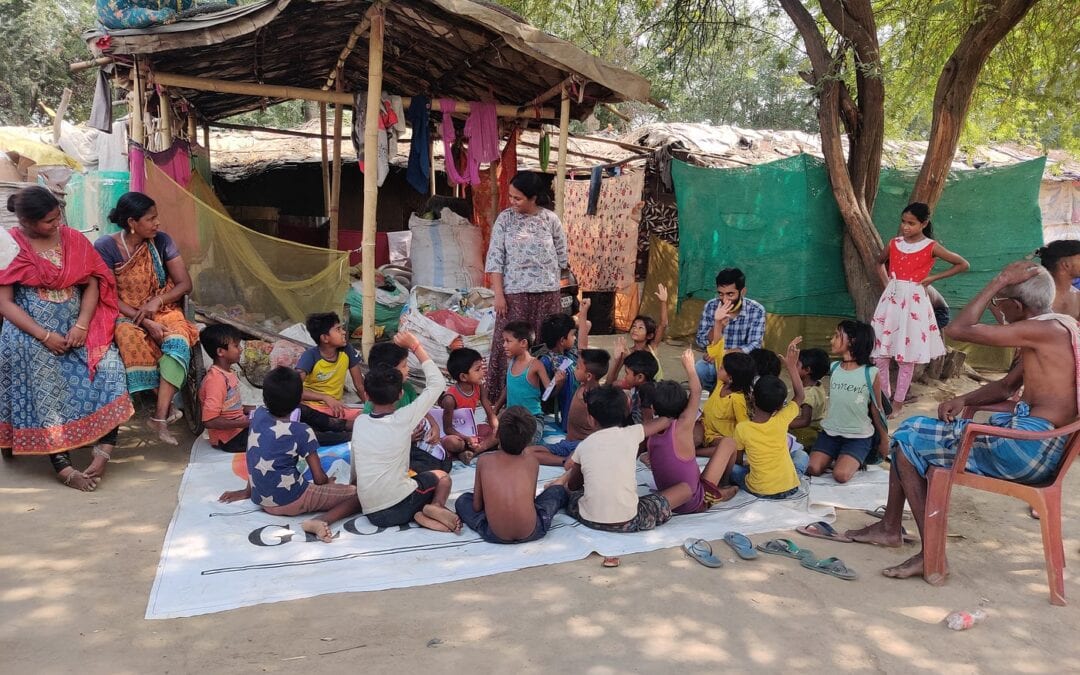
We mostly work with children from resource-poor communities and we often find in them a need to belong in the ‘mainstream’. One of our experiments with functional literacy during the post-lockdown phase flopped big time and the immediate next iteration of it was a huge success. The difference in how we implemented the same programme in both places was the approach — in one, we went all out creative with our curriculum, designing games, creating songs, and teaching numbers and alphabets through dance. After the initial excitement, we found children disinterested, not doing homework, and also barely retaining any lessons. We had to stop this intervention as their schools reopened. In our next iteration in an informal settlement, we were given a hut to convert to a school. We followed a similar flow for our curriculum but this time children kept coming back again and again, with their highest levels of curiosity and excitement. They had the desire to do what regular school-going students do. They like taking a bath, dressing up, packing their bags for school, doing their homework, getting their homework checked with a red pen, singing rhymes, learning new words, and being part of a group. They would never let a facilitator leave the school without giving them homework.
Our learning here was that our children did not just want to belong somewhere, but belong to a place that they can also associate with a mainstream understanding of ‘normal’.
5. High fives
We feel warm hugs are the best way to show someone that they belong with us and us with them. But we are also aware of how we work with vulnerable children and our engagement with them might be temporary. It feels irresponsible to build a strong emotional connection only to disappear from their lives after a point of time, leaving behind a void. Therefore, we have a strict no-hug policy with our children. But we know that children also need physical touch to grow, so, high fives are our best foot forward in this regard! We always end our sessions with a high five and usually sneak in an appreciation or two for the children who did well, sometimes patting their backs and sometimes giving a low five to someone who was more of a negative influence that day. This physical contact along with a personalized line works wonders! Even though for the wrong reasons, if not right, our children feel seen and heard and significant enough to be spoken to. They feel they belong with us.
6. Showing them their own photos and videos from time to time
There barely are people who do not get a big smile on their face on seeing a picture of them in their natural element! Also, with almost everyone having a smartphone these days, everyone loves clicking pictures and in their phone galleries, they keep pictures of friends or family or romantic interests — basically the people they love. It is quite normal to delete pictures and videos of people you do not like much. So, from time to time, we show our children photos and videos that we had clicked in their center, of them, singing, dancing, falling, laughing, cheering, learning, helping, and basically just being themselves. And we show them a few pictures of some other centers that we have been working in, to also build some context on how they are one of many and it always stays with our children how they are one of many and yet we loved them enough to keep their photos and videos and also look out for them, follow up on our small conversations and remember their names… They feel they belong with us and that is what motivates them to work together so both sides continue to belong to each other…