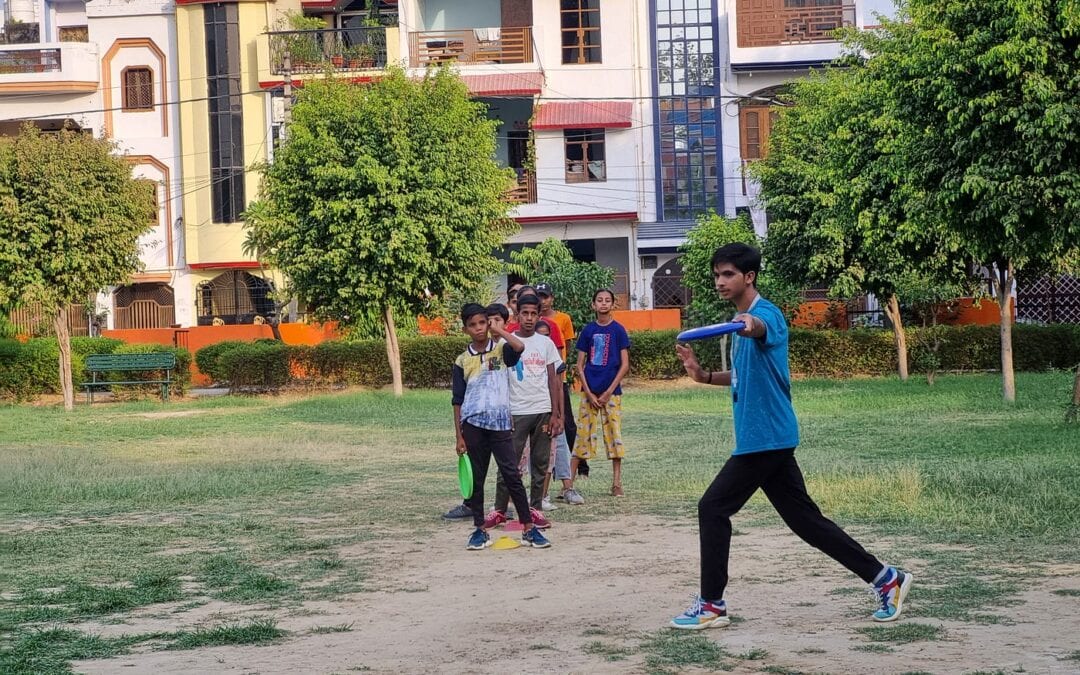
At Project KHEL’s FrisB(arabar) programme, our goal is not only to help young people excel in Ultimate Frisbee, but also to support them to become leaders in their communities. Through our Youth Coach programme, senior athletes take on the responsibility of running community-based Frisbee centres for younger children from underprivileged backgrounds.
Many of these Youth Coaches began their own journeys at Project KHEL as children. Today, they are giving back to the communities they come from by introducing new children to Frisbee, building safe and inclusive spaces to play, and supporting young people to grow. In the following sections, four Youth Coaches share how they start and sustain a Frisbee centre, build trust with children and families, and help children overcome challenges that might otherwise prevent them from participating.
Setting Up a Community Frisbee Centre
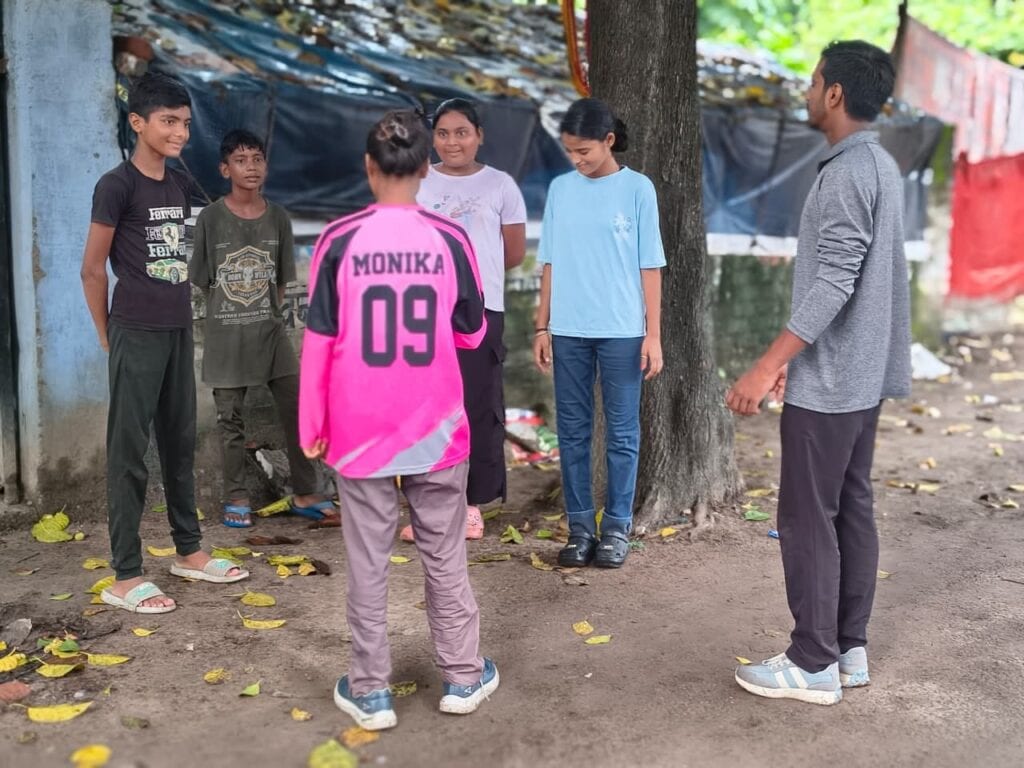
Our process begins as soon as we decide to set up a new Frisbee centre. Before sessions even start, we spend time understanding whether a location is suitable. As Youth Coaches, we visit potential areas and look at how many children live there, whether both girls and boys are likely to participate, and whether there is a safe and accessible ground where children can gather and play. Just as importantly, we try to understand whether parents and other community members are likely to support the centre.
Once we find a suitable location, we start simple and focus on building connections. During the first few sessions, a group of five or six coaches visit the area and organise friendly, informal games and activities to get children interested. We encourage the children we meet to bring their friends along, gradually helping the group grow. At this stage, our priority is not discipline or competition, but creating an environment where children feel comfortable joining in.
We make an effort to learn children’s names, ask about their classes and interests, and make sure every child feels welcome. Over the years, we have learned that small moments matter. Calling children by name, noticing when they do something well, and introducing new children to the group all help build a sense of belonging. Our goal is to create a space where children feel safe, included, and excited to return.
Sustaining the Centre
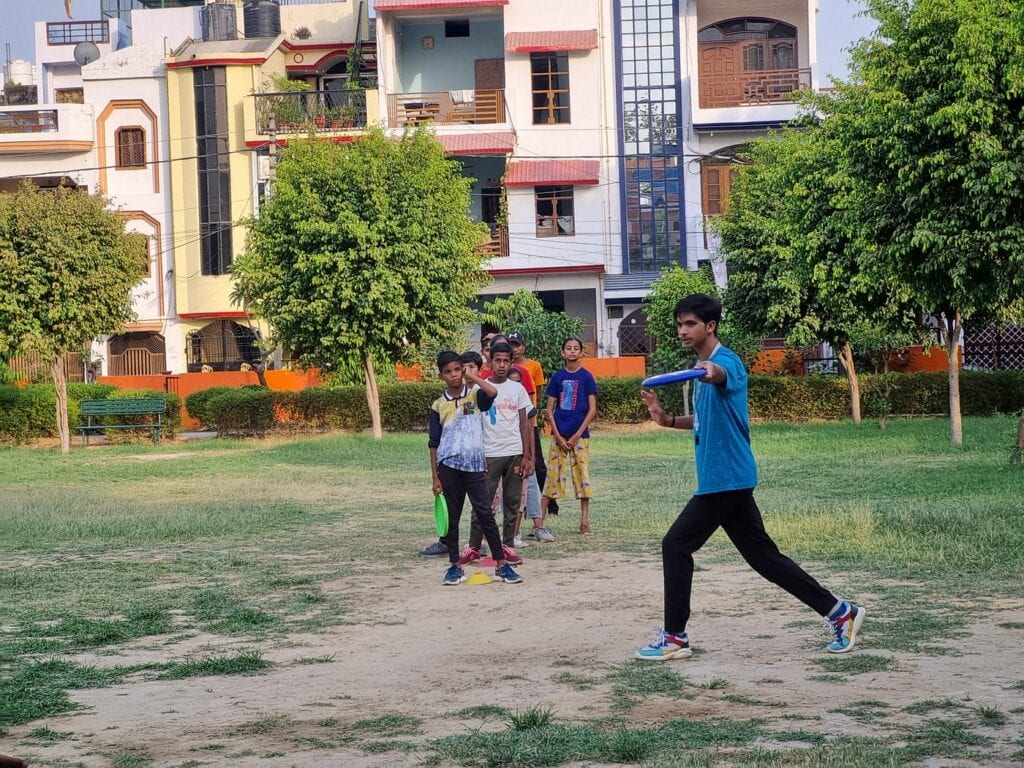
Starting a centre is only the first step. Sustaining it depends on our ability as coaches to create an atmosphere that is safe, welcoming, and most importantly, fun. Frisbee is not something our children are forced to do. We have learned that regular participation is built through trust, relationships, and enjoyment.
Children are more likely to keep coming when they feel seen, listened to, and valued. A child who enjoys the game, makes friends, and knows their coaches genuinely care about them is more likely to return week after week. At the same time, we want our sessions to promote positive values such as teamwork, empathy, listening, and mutual respect. Rather than focusing on mistakes, we encourage effort and improvement, often celebrating children with simple words of encouragement like “good try” or “good effort.”
When conflicts arise, we try to help children understand each other’s perspectives rather than resorting to punishment. Over time, these relationships become the foundation of the centre. By creating an environment where children feel supported and connected, we build a community that children want to be part of, helping the centre remain active and vibrant long after it has been established.
Helping Children Through Challenges
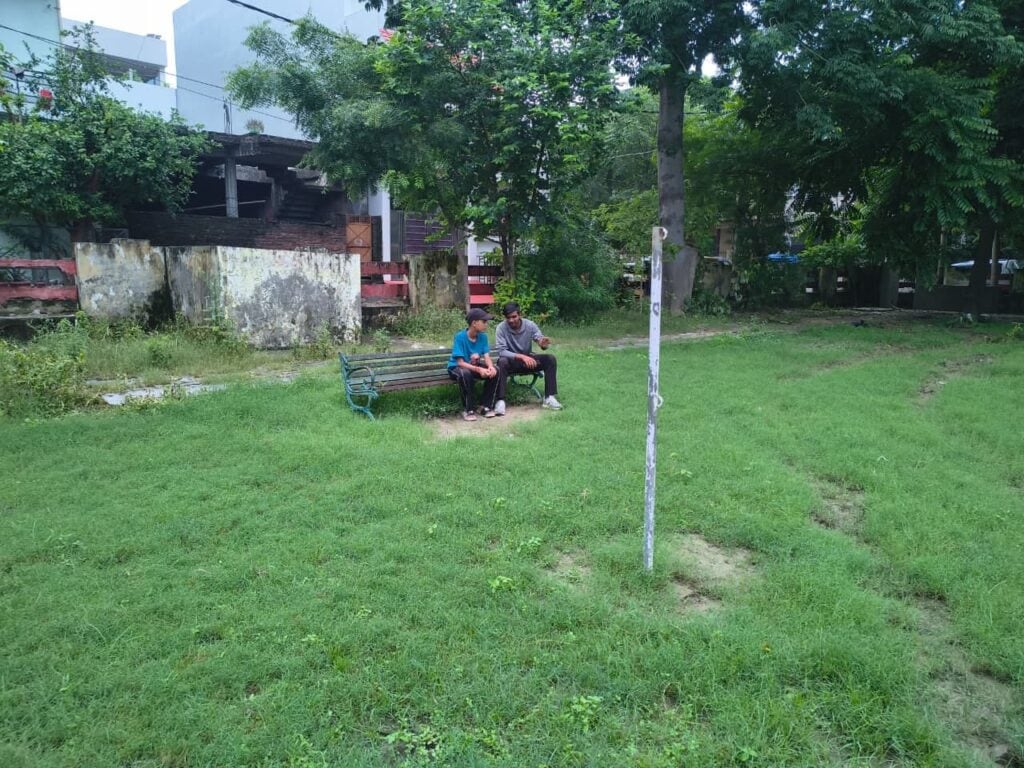
Even children who attend regularly sometimes stop coming to the centre. As Youth Coaches, understanding how to respond when this happens relies on observation, relationships, and trust. We pay attention when a child’s behaviour changes, speak with other children and community members, and try to understand what might be happening in their lives. In our experience, children stop attending for many reasons: school pressure, family responsibilities, emotional stress, friendship conflicts, or challenges at home.
One example is M. For several months, she attended Frisbee regularly and was an enthusiastic participant. Over time, however, she began attending less often and seemed increasingly withdrawn and frustrated when she did come. Through conversations with her family, we learned that she was carrying significant responsibilities at home. With her father often away for work and her mother facing health challenges, much of the day-to-day care and household work fell on M. As she became more committed to attending Frisbee, tensions grew around how she spent her time outside the home. The pressure she was experiencing began affecting both her attendance and her behaviour.
As coaches, our role was not to judge anyone involved, but to understand the situation and find ways to support her. We spent time building trust with the adults in her life and discussing why Frisbee was important to her. We also worked with M to help her manage her frustration and find constructive ways to respond when conflicts arose. At the same time, we became more flexible about attendance and punctuality, recognising that her circumstances were different from those of many other children.
Stories like M’s remind us why relationships matter. Because we know the children, their families, and their communities, we are often able to identify challenges early and find ways to support them. Sometimes that means speaking with parents and caregivers, sometimes it means adjusting expectations, and sometimes it means connecting children with additional support through Project KHEL’s academic programme. Whatever the challenge, our role is to guide children, help them think through their options, and ensure they know they have people they can turn to for support. Having these conversations with families and community members requires confidence and responsibility, but throughout the process we are supported by senior coaches and staff at Project KHEL.
Organising Tournaments
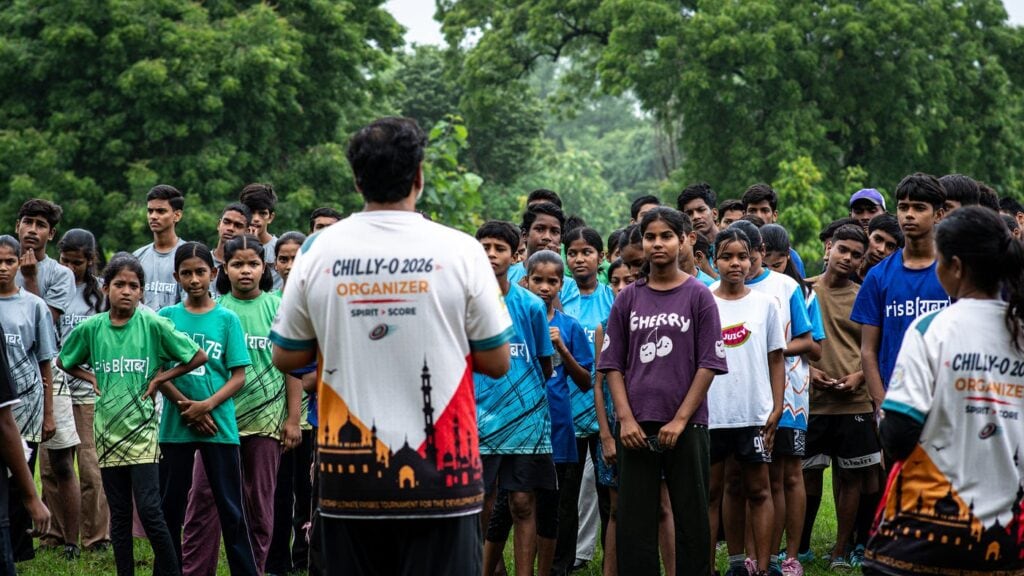
Taking leadership also extends beyond weekly Frisbee sessions. As Youth Coaches, we regularly organise local tournaments and matches between Project KHEL’s Frisbee centres. This responsibility draws on skills we learned ourselves through Project KHEL, including planning travel, coordinating with multiple groups, communicating updates, and taking responsibility for the safety and participation of younger children.
When organising a tournament, we first communicate with families to make sure they are comfortable with their children attending. We share details about the venue, timings, and travel arrangements, and keep everyone updated through phone calls, WhatsApp messages, and conversations within the community. For many children, participating in a tournament is about much more than playing Frisbee. It may be one of the few opportunities they have to travel independently within the city and spend time in a new environment alongside peers from other communities.
We help children plan how they will travel, whether by bicycle, public transport, or with support from family members. We also organise them into groups, often pairing younger children with older participants or grouping children who live near one another. Over time, children begin taking on leadership roles themselves. We identify children who can act as points of contact for their group, communicate updates to others, and help coordinate travel plans. Through this process, they develop practical life skills such as communication, planning, problem-solving, and collaboration. What begins as a trip to a Frisbee tournament often becomes an opportunity for children to build confidence, independence, and a sense of responsibility.
Completing the Cycle
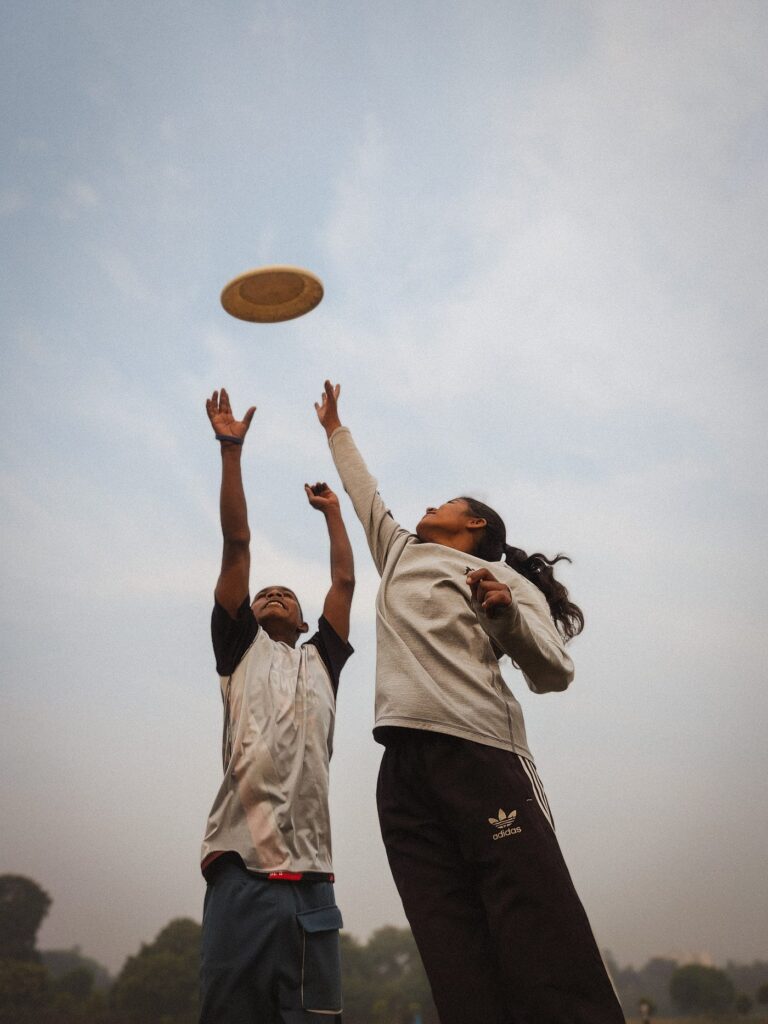
Ultimately, our goal is not just to coach Frisbee, but to help children discover their own potential as leaders. All of us started as young players before becoming Youth Coaches. As children, we looked up to the ‘didis’ and ‘bhaiyas’ who came to our communities to teach us Frisbee. Today, we have the privilege of being those role models for a new generation of children.
Having responsibility and earning the trust of children, families, and community members is one of the most rewarding parts of being a Youth Coach. It is also why we make a conscious effort to create leadership opportunities for the children at our centres. We start with small responsibilities: leading warm-ups, organising lines, taking attendance, helping younger children, or explaining drills to the group. These opportunities allow children to build confidence and learn that they can contribute to the success of the centre.
As children grow older, we encourage those who demonstrate commitment, responsibility, and enthusiasm to take on greater leadership roles. Some may join advanced morning practices, while others begin supporting coaches during sessions or helping organise activities and tournaments. Through these experiences, children learn skills that extend far beyond the Frisbee field, including communication, teamwork, decision-making, and accountability.
For some children, the journey eventually comes full circle. The child who once arrived nervously at a new Frisbee centre may go on to become a leader within the group, and one day even a Youth Coach. When that happens, they return to the same communities they grew up in and create opportunities for the next generation, just as others once did for them. For us, that is the true impact of the Youth Coach programme: young people investing in their communities and inspiring others to do the same.