Though we operate within a set curriculum, our internal training sessions and discussions focus on empowering our facilitators to deliver it effectively, while understanding the unique needs of each group they work with. Even if two centers start their journey with us at the same time and share similar school profiles, we recognize them as distinct groups with their own personalities. We allow these personalities to flourish, taking the time to understand who they are and what they need. This approach enables us to maintain flexibility within a structured framework.
Our on-ground facilitators play a critical role in this process. They assess where the curriculum needs to be accelerated and where it requires a pause. They bring to the team’s attention the conversational tracks to prioritize and identify areas of personal, social, or cognitive growth that
require additional focus. Based on these insights, we develop small but meaningful ways to tailor our interventions, ensuring they meet the specific needs of each group.
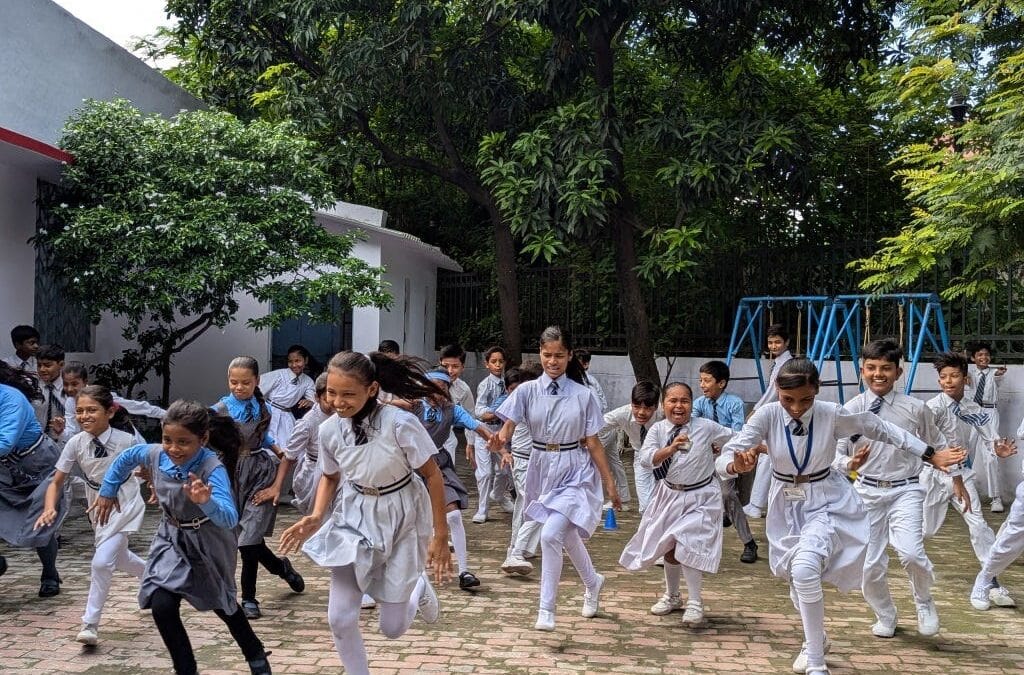
With this in mind, today we want to share about our children from Bal Bharti School. These bright, intelligent, articulate, and cheerful individuals bring a vibrant energy to their interactions. Most of the time, they are content within their friend circles, entertaining themselves with light-hearted mischief. Eventually we noticed a slump in their engagement with us. While they were happy to participate in our activities, they did so without much enthusiasm, as long as the status quo of their interactions remained undisturbed.
Recognizing this shift, we began focusing our conversations with the group on the importance of not underestimating their own potential. We encouraged them to hold themselves accountable to the high standards of intellect and creativity that we knew they were capable of but seemed to have stopped striving for. This approach led us to tailor our interventions to reignite their curiosity and problem-solving abilities.
The results were nothing short of inspiring. Whenever we introduced new challenges, the children consistently surprised us with their innovative solutions. Here are a few examples:
- Field Marking with Chalk — One day, we deliberately ‘forgot’ to bring cones to mark the playing field. Without missing a beat, the children found broken pieces of chalk and drew lines on the ground to define the space.
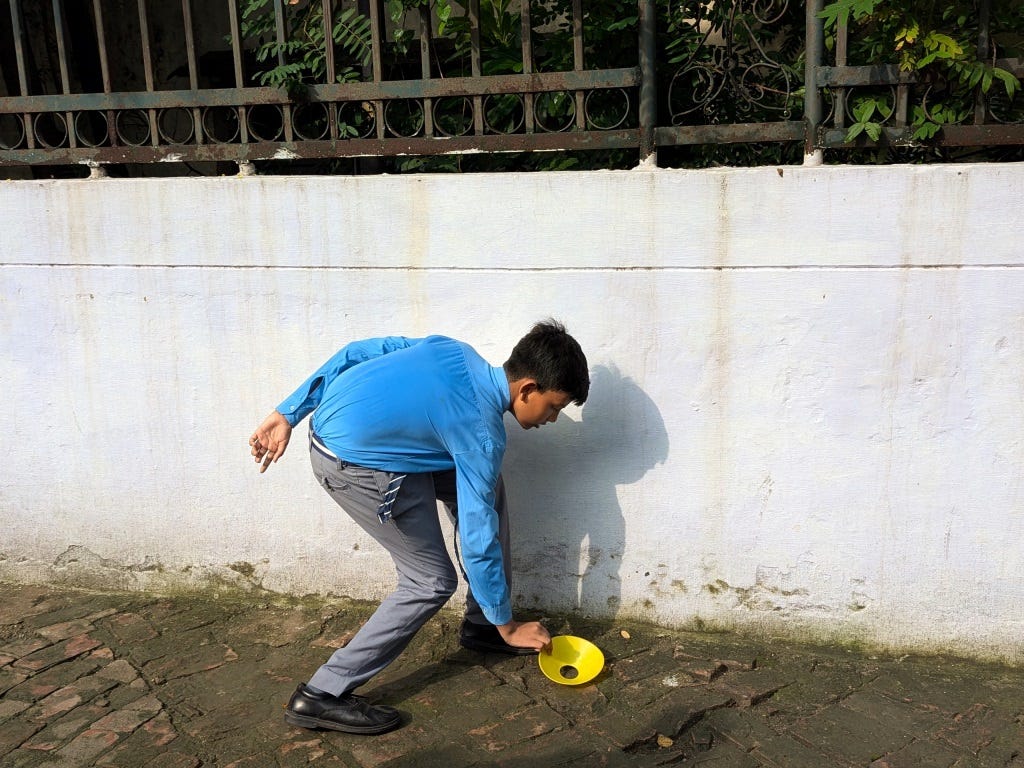
2. Marking Mossy Areas — On another occasion, we brought cones but not enough for the entire field. Due to recent rains, parts of the play area were covered in moss, making them slippery and hazardous. Instead of narrowly marking a smaller playing space, the children suggested marking only the mossy areas to avoid, ensuring the rest of the field could still be used safely.
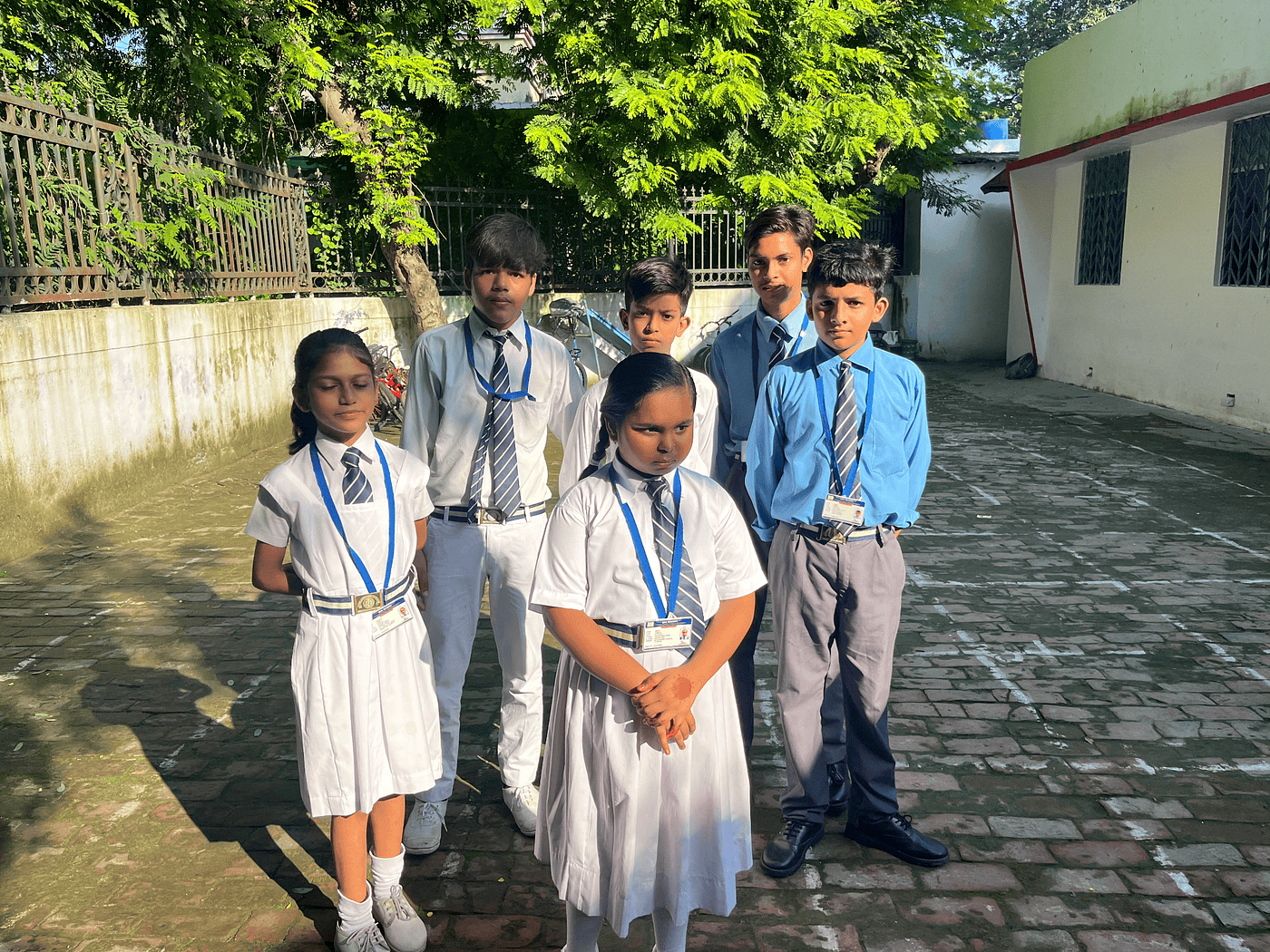
3. Team Markers with ID Cards — During a competitive team game, we intentionally didn’t bring bibs. The children quickly adapted, deciding to use their ID cards as team markers, creating “Team ID”versus “No ID.”
4. Learning through Unfamiliar Languages — One of our most daring experiments was to conduct an entire one-hour session in Kannada and Bengali, two languages completely unfamiliar to the children. Despite the language barrier, they engaged fully, participating in a game of Kho Kho with additional rules and a storytelling activity. They asked us to use more hand gestures and actively listened for similar-sounding words to deduce instructions. (Here is the link to know more about this)
Through these interactions, we saw the children push their boundaries, embrace challenges, and rediscover their passion for learning and collaboration. They reminded us of the incredible creativity and resilience that lies within every child when given the right encouragement and opportunity.
As a next step, we introduced a class project to encourage solution-oriented thinking. We began by showing a video of an overflowing drain causing large puddles on the road. While adults grudgingly waded through, a young boy paused, found bricks, and built a path — not just for himself but for
others.
This sparked a discussion on how creative problem-solving benefits both individuals and the community. We talked about finding opportunity in crisis and showed a short Shark Tank video to illustrate how small, innovative ideas can solve everyday problems in their schools and lead to
monetary success.
We then divided the children into class-wise groups and asked them to brainstorm everyday issues they often overlook and propose no-cost solutions.
In this section there is a list of issues shared –
- Tall children sit in the front row, blocking the view for shorter students.
- Cycles are parked haphazardly by students.
- Chalks and dusters left on the teacher’s desk make it dirty.
- Younger or shorter children struggle to lock toilet doors.
We then gave them a couple more days to sleep on these problems and come up with creative solutions. This is what each of the classes did on the final day –
Class 5
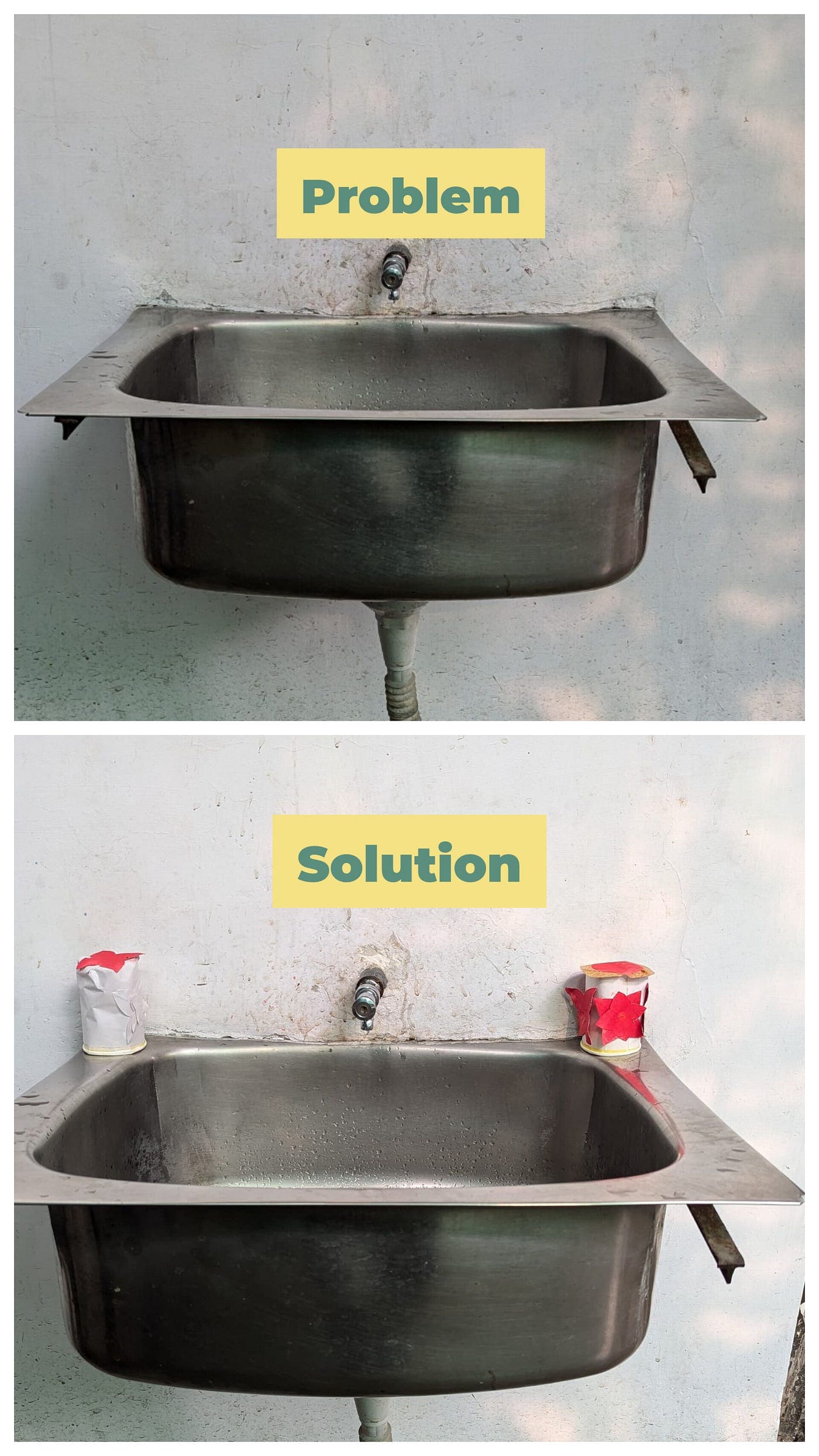
Problem — Many children forget to carry their bottles to school, so they try to use their hands to drink from the water dispenser, leading to water wastage and also wetting their clothes.
Solution — Decorated disposable glasses placed carefully near the tap, which are pretty enough that no one would feel like throwing them away after the first use.
Class 6
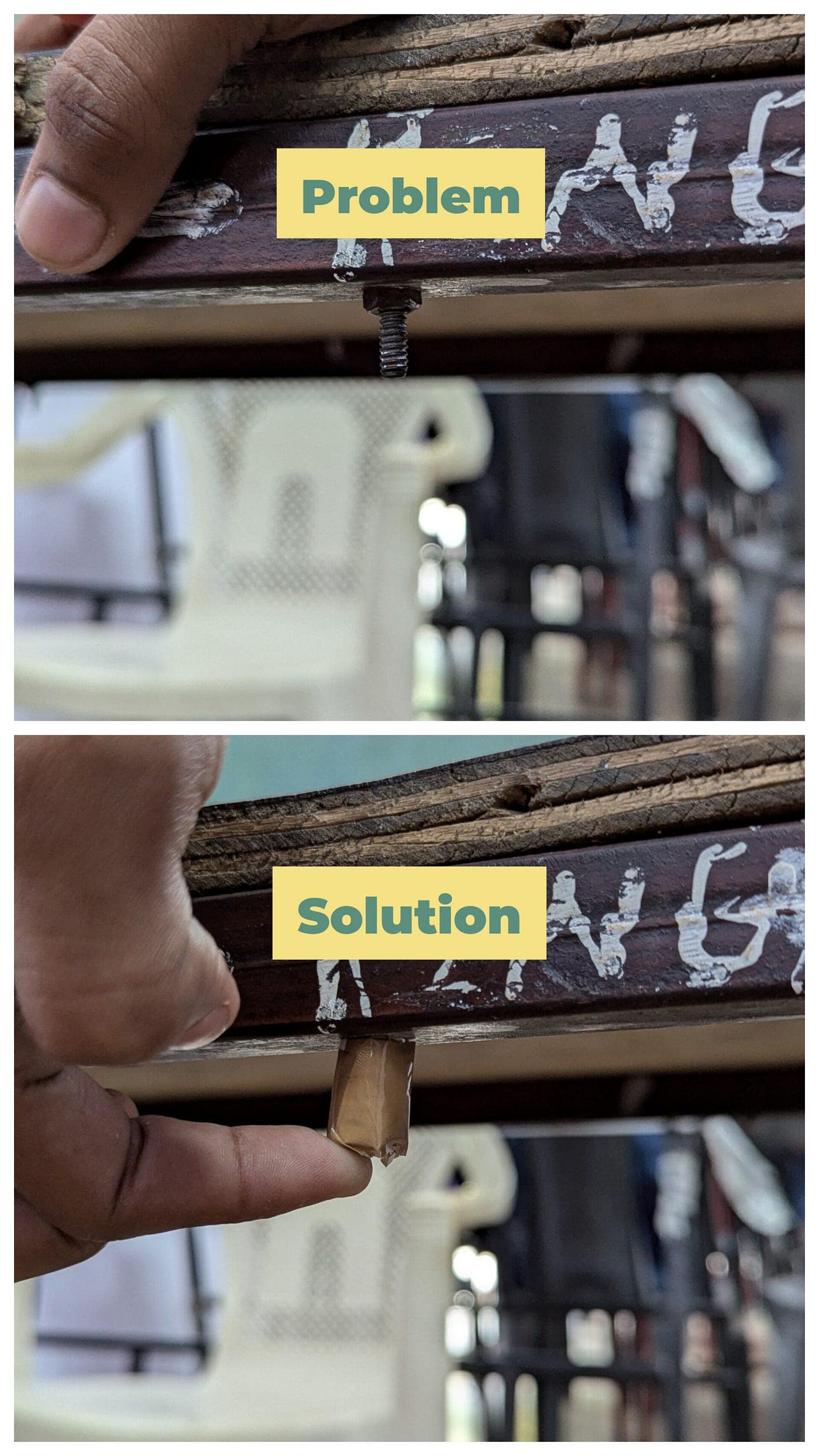
Problem — Some of their tables and chairs have nails sticking out of them, causing scratches on the children who use them.
Solution — Waste paper cushions taped on to the sticking nails, so no one gets hurt anymore.
Class 7
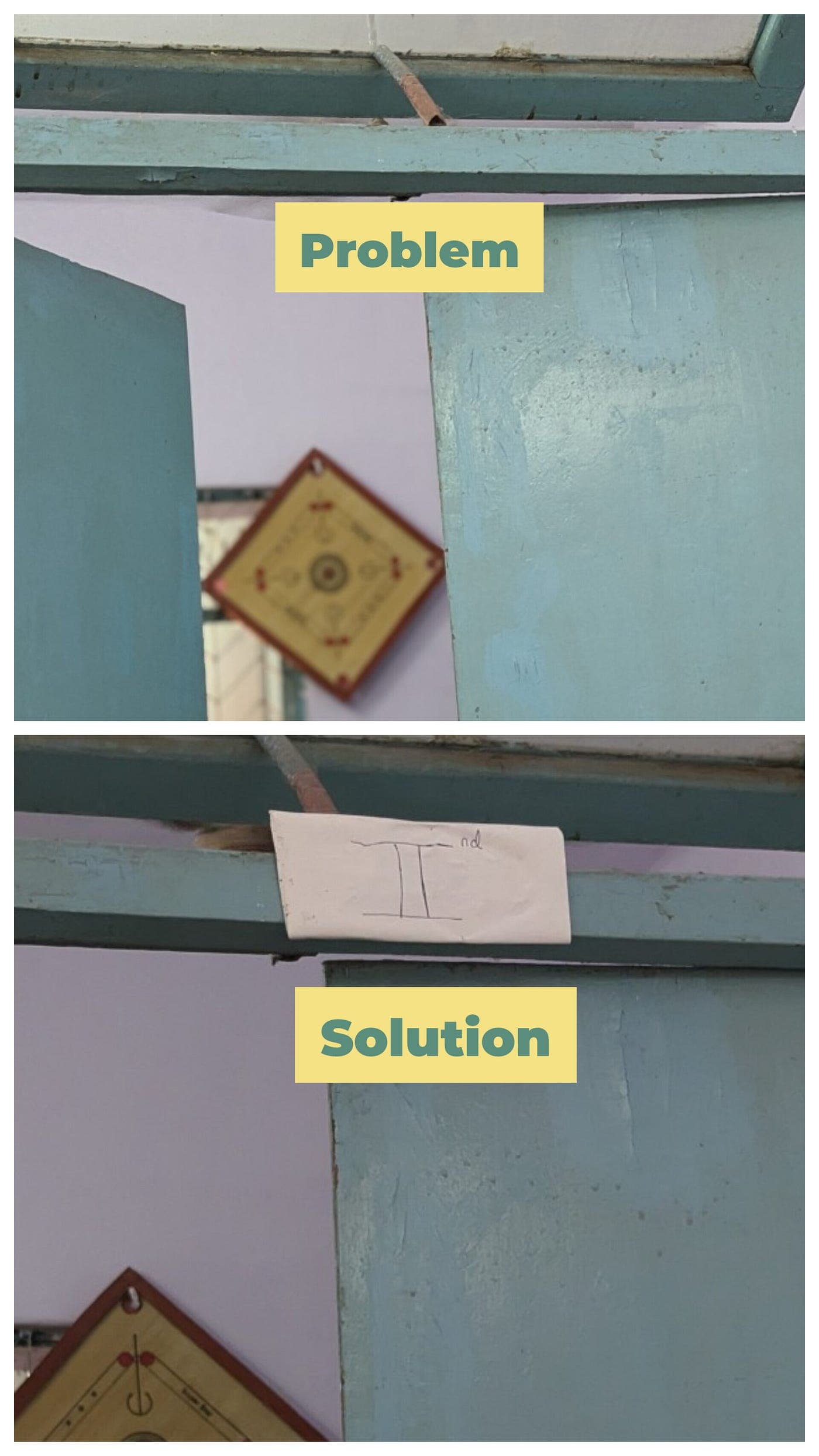
Problem — The school runs in a small space with a limited number of children in each class. Their classrooms are partitioned using a thick board. So, every year, based on the size of a class, a particular area of the school is allotted to them as their classroom. Their school is also very enthusiastic about additional opportunities they provide to them, but every time there is a visitor in school, they are clueless about where to go or which section of the space hosts which class.
Solution — Hand written placards pasted on the door or the partition of each class, that highlights the class sitting there. It is written on paper and stuck with a tape, so can be removed every year when the classrooms are shifted. This way, their classes will still have a marker and neither cost
much money.
We’re always delighted to see how our kids are able to take what we teach them during a Made In Maidaan session and apply it to their everyday lives.